
A managed Spark lakehouse, a Jupyter-compatible notebook workspace, a multi-tab SQL workbench and a streaming pipeline builder — running on your infrastructure, against data that never has to move.
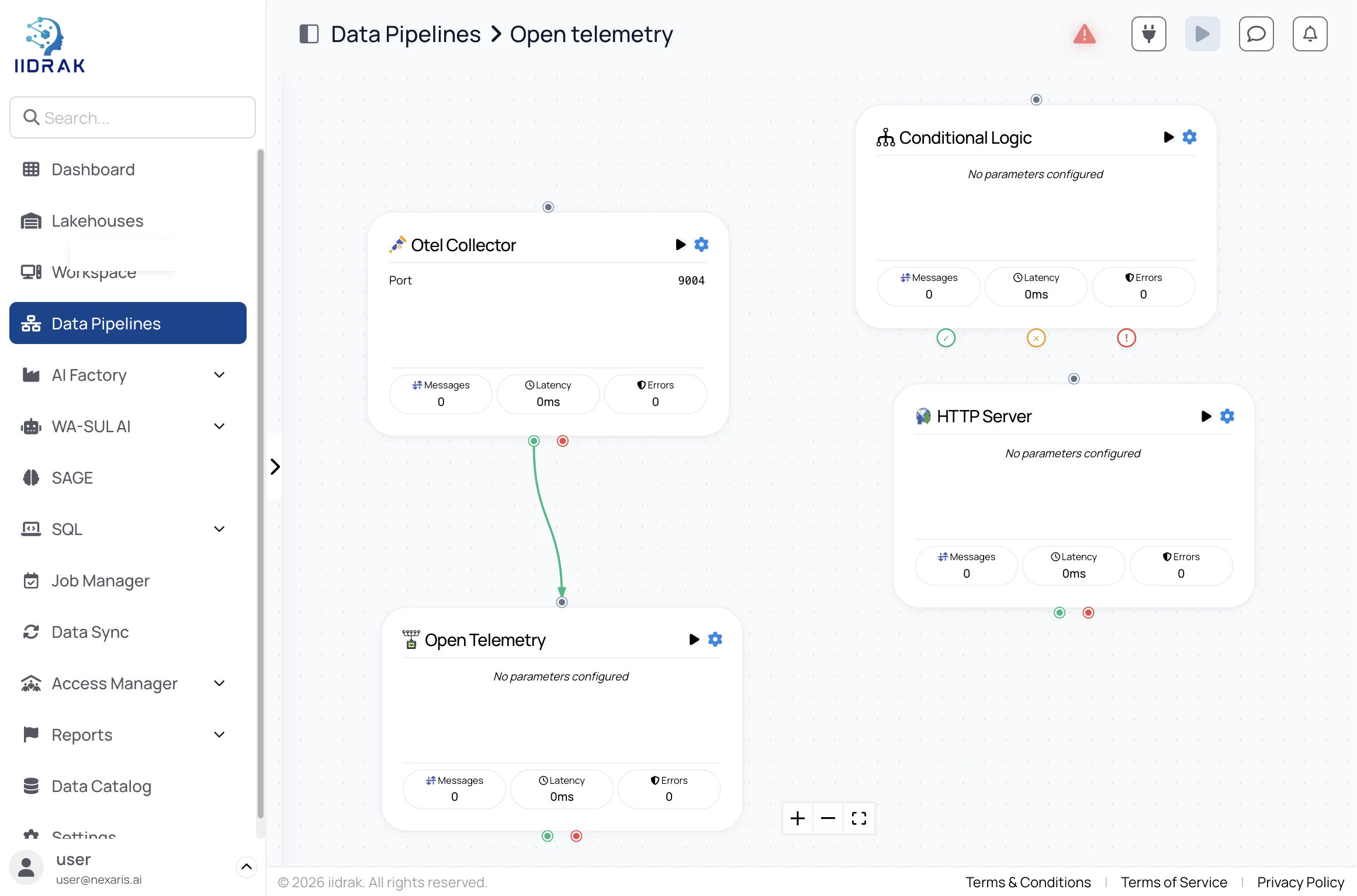
Recorded from a live deployment — not a mockup.
Dedicated Spark clusters per environment — Dev, Test, Prod — each bound to its own storage backend, with live cluster metrics and Spark history.
A catalog-aware SQL workbench across internal and federated sources, plus collaborative notebooks attached directly to Lakehouse compute.
Drag-and-wire pipelines for event-driven ingestion, and managed change-data-capture replication from MSSQL, MySQL, Oracle and Postgres.
Azure Blob Filesystem, Gravitino Virtual Filesystem, Kubernetes, S3 Bucket or any S3-compatible object storage. Provisioning brings up a master node and workers automatically.
Every Lakehouse exposes a JDBC endpoint, so DBeaver, DataGrip and existing BI tools connect directly. Generate scoped app passwords rather than reusing login credentials.
12 triggers including Kafka, Azure Event Hub, HTTP Server, Otel Collector and CDC consumers; 5 transformations; 7 datasources; and datasinks for Iceberg, Parquet, Elasticsearch and OpenTelemetry.
Smart AI for Generative Exploration — a governed natural-language layer over Lakehouse data. Business users ask questions in plain English; answers are grounded in real tables and filtered through Guardiuum policy.
A built-in chart builder bound to Lakehouse tables, composable dashboards with Restricted or Public access, and Libraries to hand a whole reporting suite over as one link.